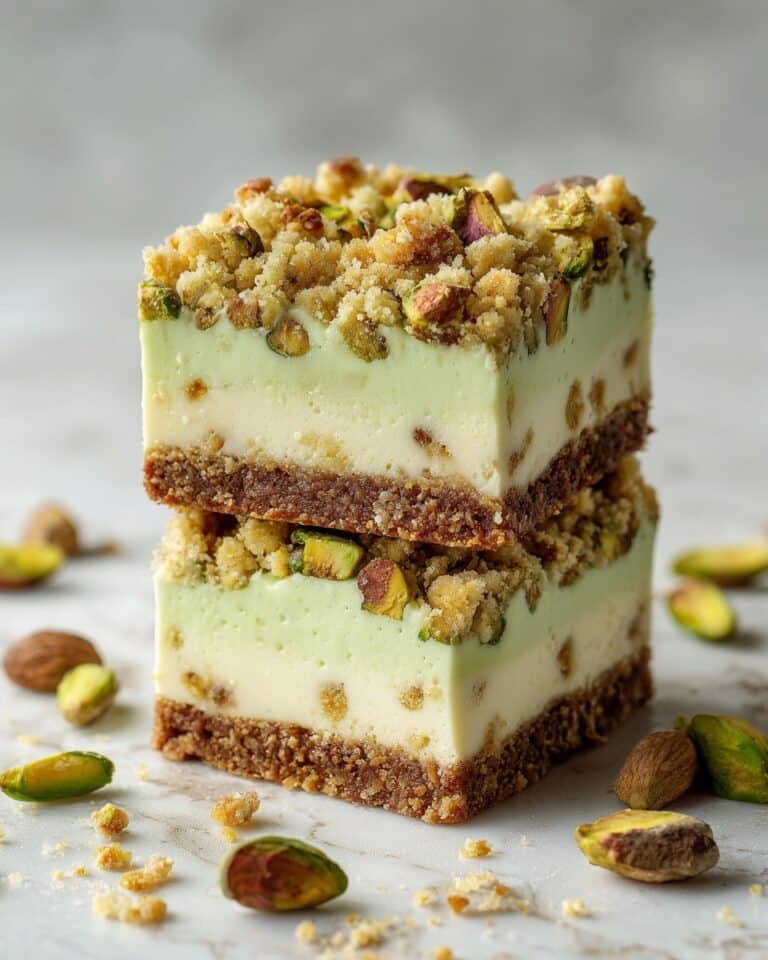
Pistachio Chocolate Bark Recipe
Introduction
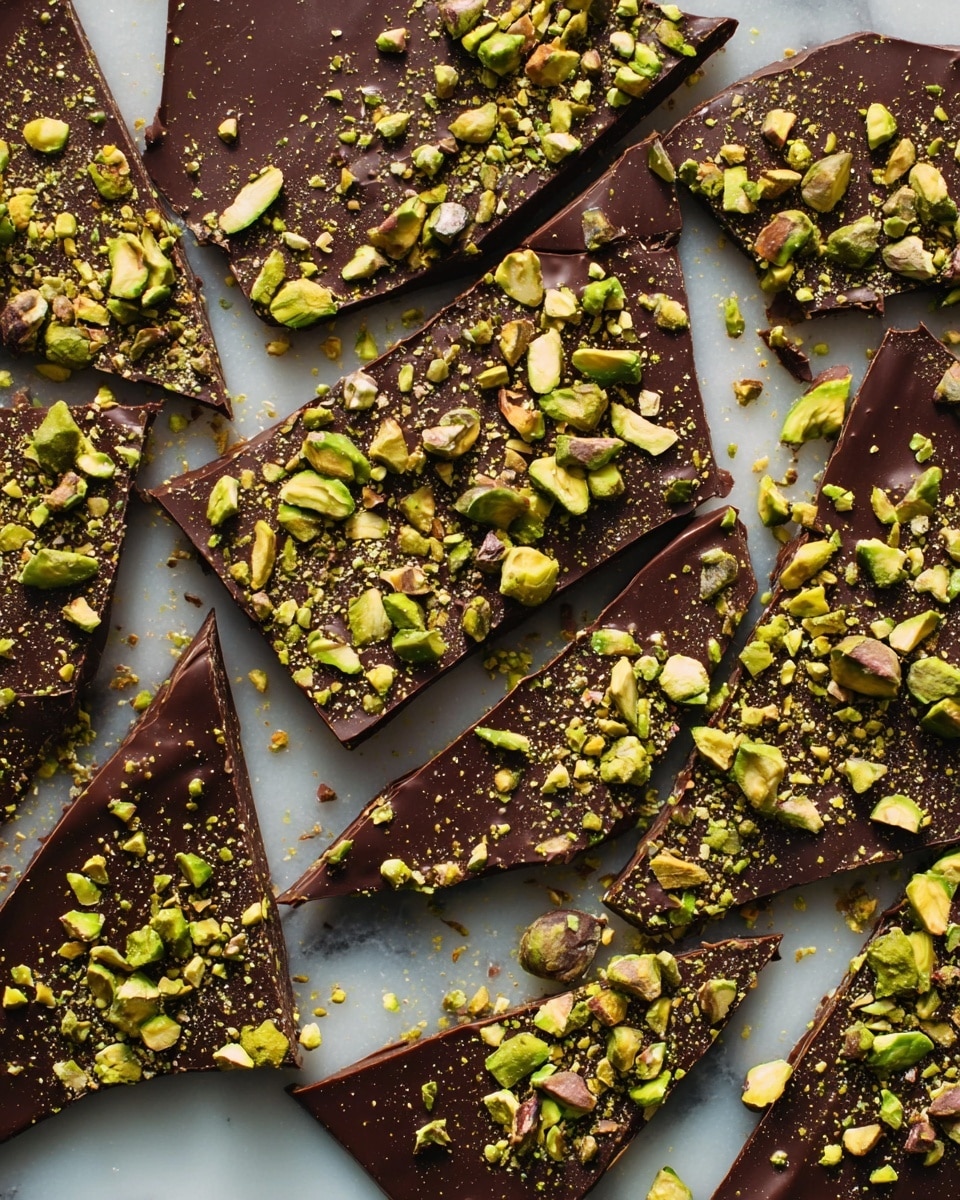
Pistachio chocolate bark is a simple and elegant treat that combines the rich flavor of dark chocolate with the nutty crunch of roasted pistachios. It’s perfect for gifting, snacking, or adding a homemade touch to dessert platters.
Ingredients
- 8 ounces dark chocolate baking wafers
- 1/4 cup chopped roasted, salted pistachios
Instructions
- Step 1: Line a rimmed baking sheet with parchment paper. Place the chocolate wafers in a heatproof bowl.
- Step 2: Set the bowl over a pan of rapidly boiling water (or use a double boiler). Stir frequently until the chocolate is completely melted and smooth.
- Step 3: Pour the melted chocolate onto the prepared baking sheet and spread it evenly to about 1/8 inch thickness.
- Step 4: Sprinkle the chopped pistachios evenly over the surface of the chocolate.
- Step 5: Place the sheet in a cool area to allow the chocolate to harden, about 2 hours.
- Step 6: Once hardened, break the chocolate bark into rough pieces and serve.
Tips & Variations
- For extra flavor, add a pinch of sea salt or a drizzle of white chocolate before the bark hardens.
- Try substituting pistachios with almonds, hazelnuts, or dried cranberries for different textures and tastes.
- Use high-quality dark chocolate for the best flavor and smooth texture.
Storage
Store the chocolate bark in an airtight container at room temperature or in the refrigerator for up to two weeks. If refrigerated, allow it to come to room temperature before serving to avoid condensation. Bark can also be frozen for longer storage; thaw completely before enjoying.
How to Serve
Serve this delicious recipe with your favorite sides.
FAQs
Can I use milk or white chocolate instead of dark chocolate?
Yes, you can use milk or white chocolate wafers as a substitute. Keep in mind that the flavor and sweetness will vary depending on the type of chocolate used.
How do I prevent the chocolate from seizing while melting?
Make sure no water gets into the chocolate while melting. Stir it gently and melt it slowly over low heat using a double boiler method to prevent overheating and seizing.